 EN
EN

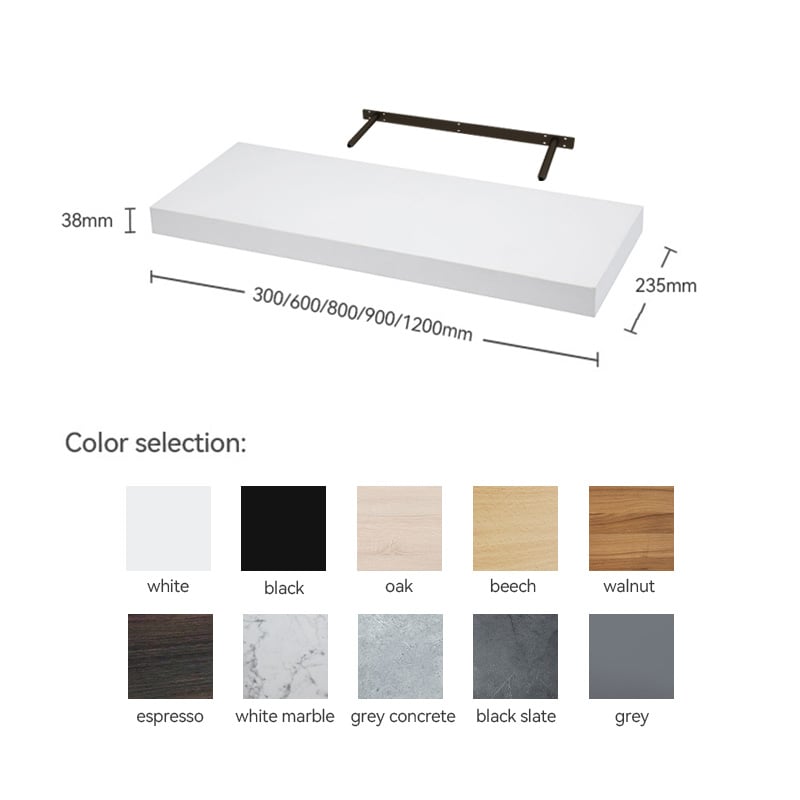
In retail and commercial environments, shelf design is far more than a storage decision. The way shelves are mounted, supported, and presented directly influences how customers perceive a brand, a product, or a space. Floating wood shelves supported by concealed brackets have become one of the most sought-after display solutions in modern commercial interiors. When concealed brackets are used correctly, they eliminate the visual clutter of exposed hardware and let the shelf itself take center stage, creating a seamless, architectural look that customers and clients respond to positively.
Choosing the right concealed brackets for a floating wood shelf installation in a retail or commercial setting requires understanding load requirements, wall construction, shelf depth, and aesthetic goals. Unlike residential applications, commercial spaces demand higher performance standards because shelves often carry heavier merchandise, experience more frequent loading changes, and must meet safety codes. This guide explores how concealed brackets work, what makes them suitable for commercial shelving, and what buyers should evaluate before specifying them for a project.
How Concealed Brackets Support Floating Wood Shelves
The Structural Logic Behind Concealed Brackets
Concealed brackets are engineered steel rods or plates that are inserted directly into a wood shelf, anchored into a wall stud or structural substrate on the other end. The shelf slides over the concealed brackets, completely hiding the hardware inside the wood. Because the support mechanism is internal rather than external, the shelf appears to float without any visible means of support. This is what gives floating shelves their clean, minimal aesthetic — and it is entirely made possible by well-designed concealed brackets.
The structural strength of concealed brackets depends on the quality of steel used, the diameter and length of the rods, and the depth of wall embedment. In commercial applications, thicker steel concealed brackets with larger diameters are typically required to handle heavier loads. Properly specified concealed brackets distribute cantilever forces efficiently across the wall anchor points, reducing the risk of deflection or failure even under sustained heavy use. For retail shelving that must remain level and reliable over years of operation, this structural integrity is non-negotiable.

Wall Compatibility and Anchoring for Commercial Use
Concealed brackets perform best when anchored into solid structural elements such as timber studs, steel framing, or concrete walls. In commercial construction, masonry and concrete walls are common, and concealed brackets can be secured using heavy-duty anchors rated for the expected loads. When the wall substrate is identified correctly before installation, concealed brackets deliver exceptional holding power that far exceeds what surface-mounted shelf hardware can achieve. Knowing the wall type is therefore the first step in any concealed brackets specification process.
Drywall-only installations are generally not recommended for concealed brackets in commercial environments unless a backing plate or horizontal blocking has been installed behind the drywall surface. Retail shelves can carry significant weight — product inventory, display units, and decorative objects all add up quickly. Specifying concealed brackets without confirming wall compatibility is one of the most common installation errors. Commercial fit-out teams should always evaluate the wall structure before selecting concealed brackets of any size or configuration.
Design Advantages of Concealed Brackets in Retail Spaces
Creating Visual Continuity and Brand Alignment
Retail environments are carefully designed experiences. Every visual element, from lighting to fixtures to shelving, communicates a brand message. Floating wood shelves mounted with concealed brackets contribute to a sense of quality and intentionality that open bracket systems simply cannot match. When concealed brackets are used throughout a store, the result is a cohesive, uninterrupted visual line along each shelf, reinforcing the premium character that many retail brands work hard to project.
Concealed brackets also allow greater flexibility in shelf material selection. Because the hardware is hidden, designers can choose from a wide range of wood species, finishes, and thicknesses without worrying about whether the bracket style matches the overall design language. Solid oak, walnut, pine, or engineered wood all work equally well over concealed brackets, giving interior designers and retail fit-out teams the creative freedom they need. This design neutrality makes concealed brackets the preferred hardware choice for high-specification commercial interiors.

Adaptability Across Commercial Applications
Beyond traditional retail, concealed brackets are widely used in hospitality settings such as hotel lobbies, restaurant feature walls, and café display areas. In office environments, floating wood shelves on concealed brackets create elegant storage and display without the bulk of furniture. Commercial libraries, co-working spaces, and showrooms also benefit from the streamlined aesthetic that concealed brackets enable. The versatility of concealed brackets means that a single hardware type can serve multiple project types, simplifying procurement and installation planning.
For commercial specifiers and interior contractors, concealed brackets that come in multiple sizes and configurations offer the greatest project flexibility. A supplier that offers concealed brackets in varying rod lengths, diameters, and finish options allows design teams to match the hardware precisely to shelf depth, load requirement, and wall type without having to compromise on any front.
Selecting the Right Concealed Brackets for Your Project
Load Rating and Steel Quality
Not all concealed brackets are engineered to the same standard. In commercial environments, the load rating of concealed brackets must be matched to the actual weight the shelf will carry, with an appropriate safety margin applied. Steel grade, rod diameter, and weld quality all influence the final load capacity. Heavy-duty concealed brackets designed for commercial use are typically made from solid steel rod rather than hollow tubing, providing greater stiffness and resistance to deflection. Before purchasing, buyers should request load ratings and material specifications from the supplier and verify that the concealed brackets meet the requirements of the specific installation.
Size Selection and Installation Depth
Concealed brackets are available in a range of lengths to match different shelf depths. As a general rule, the concealed brackets should extend at least two-thirds of the shelf depth into the shelf body to ensure adequate support and prevent the shelf from tipping forward under load. For shelves deeper than 250mm, longer concealed brackets are required, and wall anchor spacing should be adjusted accordingly. Installation teams must also ensure that the holes drilled into the shelf align precisely with the concealed brackets to avoid internal stress points that could crack the wood over time.
When concealed brackets are properly sized and correctly installed, floating wood shelves in retail and commercial spaces perform reliably for years without visible movement or hardware failure. The investment in correctly specified concealed brackets pays dividends in reduced maintenance costs, improved safety, and a consistently professional appearance that reflects well on the businesses occupying the space.
FAQ
What shelf depth is suitable for concealed brackets in commercial installations?
Concealed brackets are available in multiple lengths, typically ranging from 75mm to 250mm or more. For commercial shelving, the concealed brackets should penetrate at least two-thirds of the shelf depth. A 200mm deep shelf should use concealed brackets of at least 130mm in insertion length. Always match concealed brackets to both shelf depth and expected load before installation.
How many concealed brackets are needed per shelf in a retail setting?
The number of concealed brackets required depends on shelf length and the total load the shelf must carry. As a general guideline, concealed brackets should be spaced no more than 400–500mm apart along the shelf length. For longer retail shelves carrying heavy merchandise, additional concealed brackets reduce deflection and increase overall stability. Consult the load ratings of the concealed brackets you are using to determine the correct spacing for your specific application.
Can concealed brackets be used with engineered wood or only solid timber?
Concealed brackets work effectively with both solid timber and engineered wood products such as LVL, MDF, and plywood, provided the material is dense enough to hold the concealed brackets securely without cracking or splitting. For engineered boards with hollow cores or low-density composition, concealed brackets may not grip reliably and alternative shelving hardware should be considered. Always verify material compatibility when specifying concealed brackets for commercial floating shelf projects.